Islamic architectural features incorporated in temple architecture post 1200 CE
A brief overview of how Hindu temples and royal palaces built after c.1200 CE incorporated Indo-Islamic architectural features, with examples of specific monuments, and exact features that were was borrowed.
This post keeps theology separate from architecture and focuses strictly on form, technique, and aesthetics.
1. What “Indo-Islamic features” actually means (architecturally)
Indo-Islamic architectural elements are not religious symbols. They are engineering, aesthetic, and spatial techniques developed under Islamic patronage in India, drawing from:
• Persian
• Central Asian
• Earlier Indian traditions
Key features include:
• True arches (voussoir arches)
• Domes (double-shell, bulbous, ribbed)
• Geometric & vegetal (arabesque) ornament
• Symmetry and axial planning
• Enclosed courtyards
• Chhatris evolving into hybrid forms
• Charbagh-style spatial layouts
• Advanced water management (fountains, channels)
2. Hindu Temples Showing Indo-Islamic Influence (Post-1200)
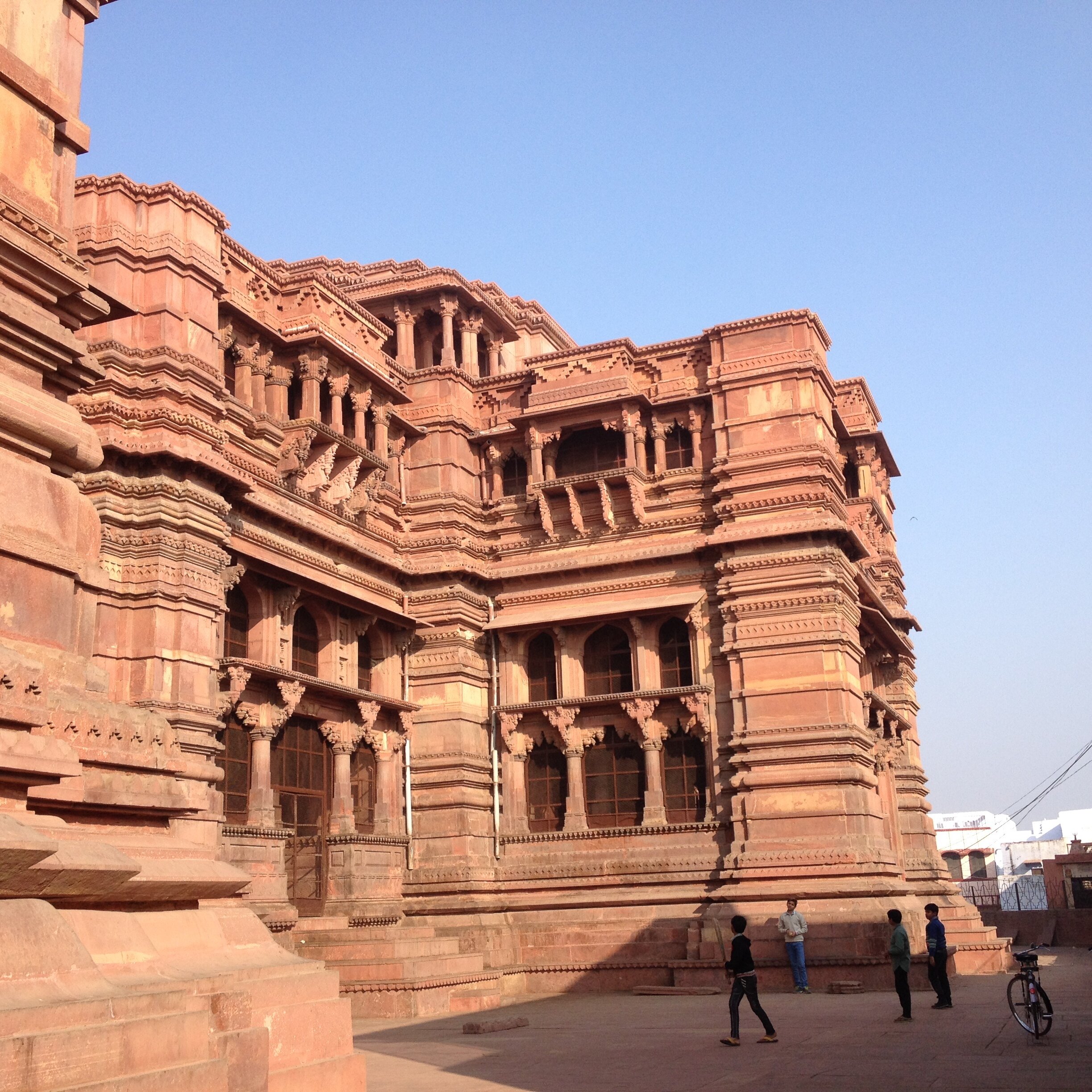
A. Govind Dev Ji Temple (1590 CE)
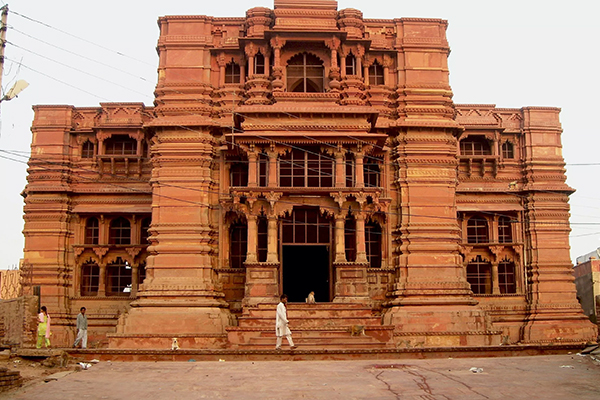

Patron: Raja Man Singh (general of Akbar)
Period: Mughal era
Indo-Islamic features present:
• Red sandstone construction (Mughal imperial material)
• Multi-storey elevation resembling Mughal palaces
• True arches instead of corbelled arches
• Symmetrical façade
• Minimal sculptural excess, emphasis on geometry
Scholarly consensus:
This temple is routinely cited as a Mughal-period Hindu temple using Islamic structural vocabulary while remaining ritually Hindu.
📚 Catherine Asher, Architecture of Mughal India
B. Madan Mohan Temple (1580s)
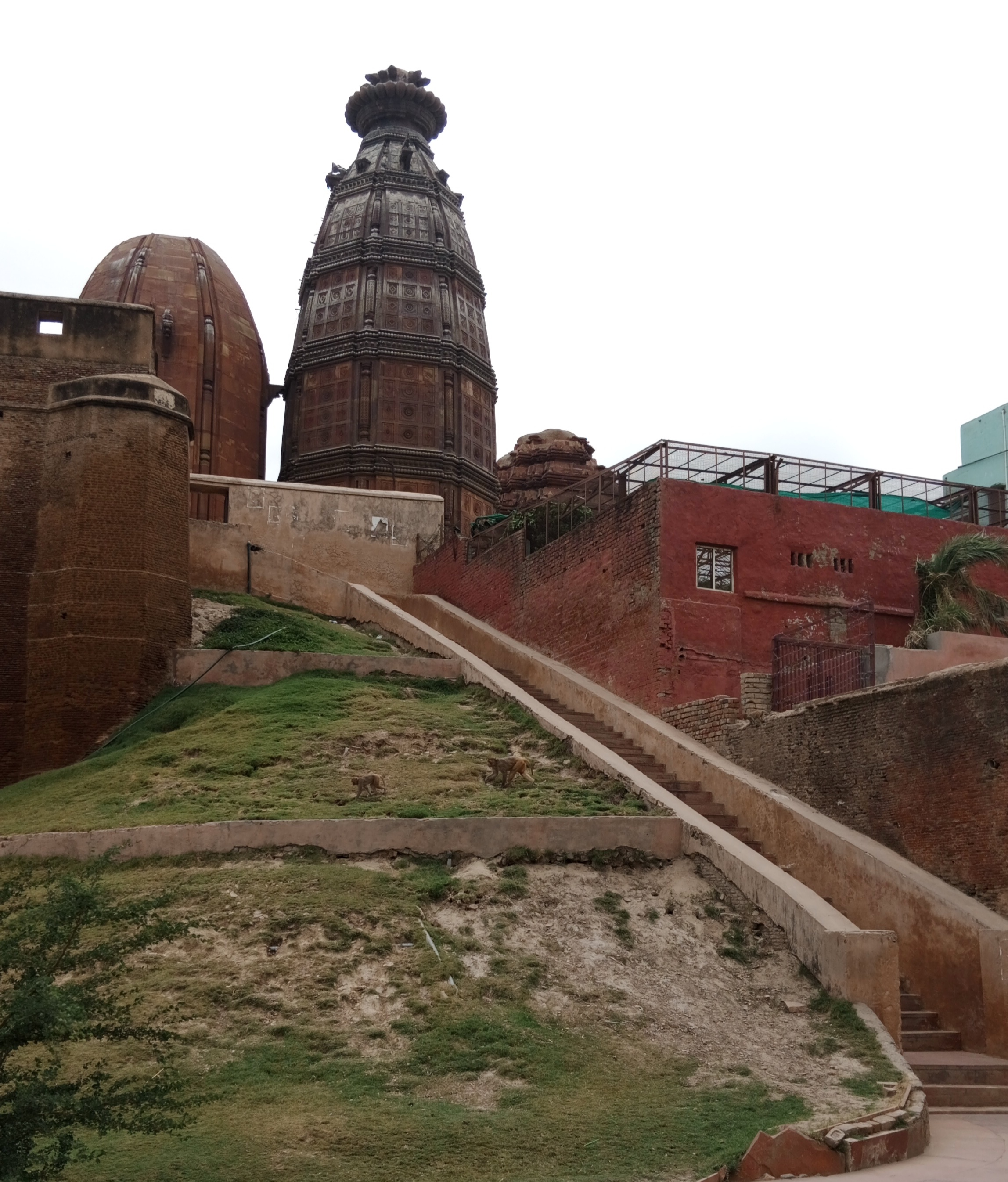
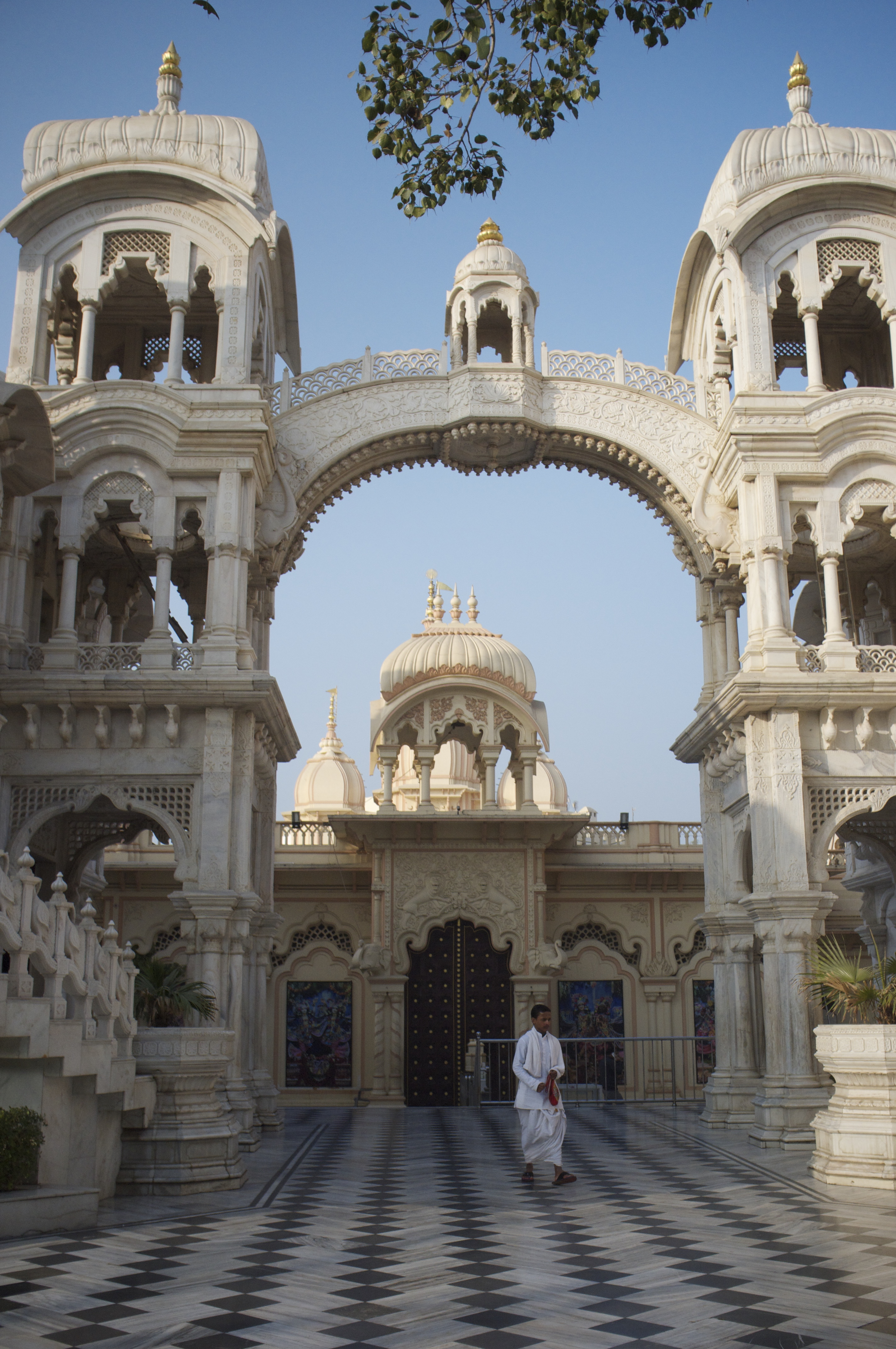
Indo-Islamic elements:
• Elevated plinth resembling Mughal forts
• Arched openings
• Octagonal towers
• Fortress-like massing
Important:
The temple’s form reflects Mughal defensive and palace architecture, not classical Nagara temple shikhara alone.
📚 George Michell, The Hindu Temple
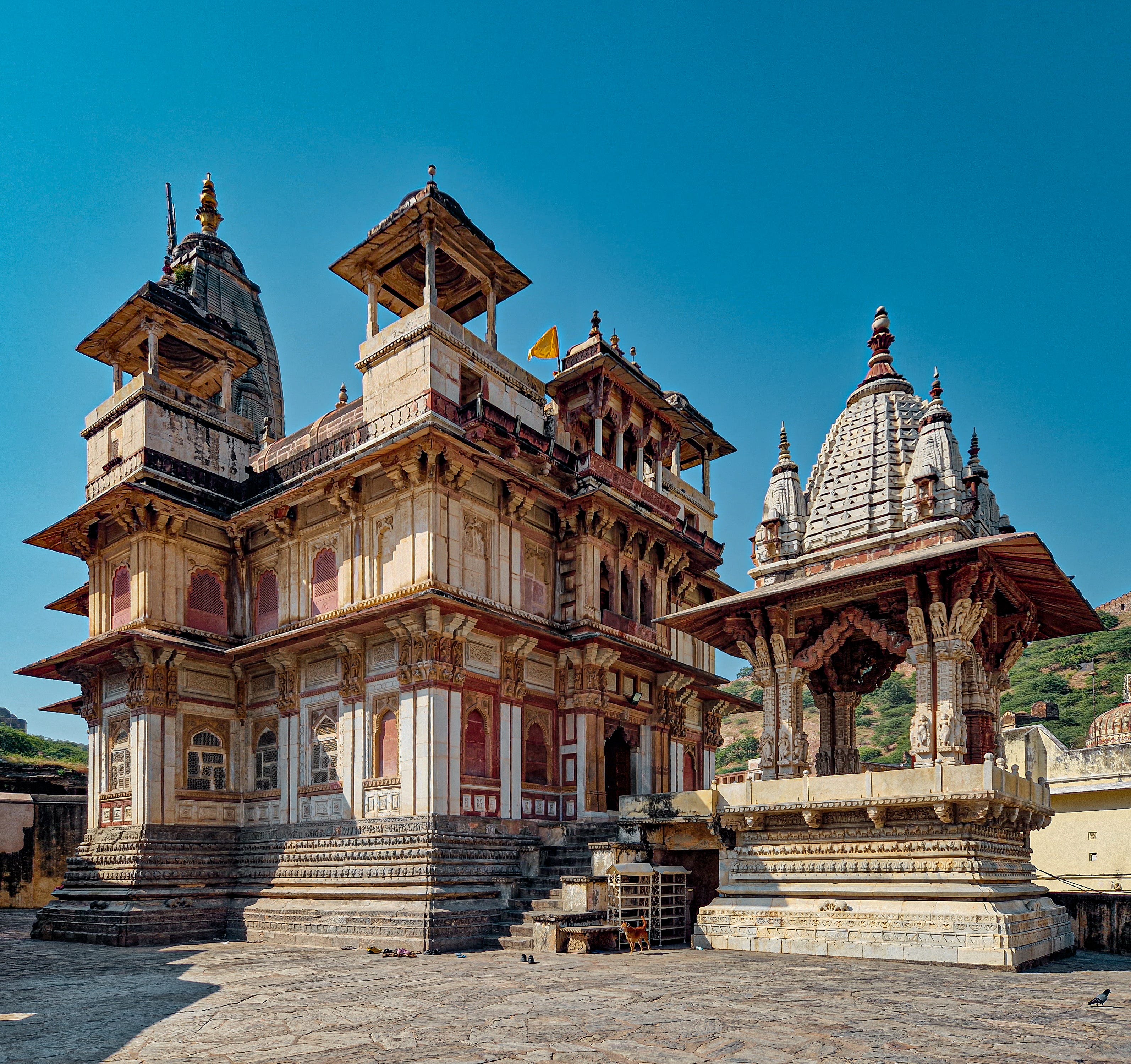
C. Jagat Shiromani Temple (1601 CE)

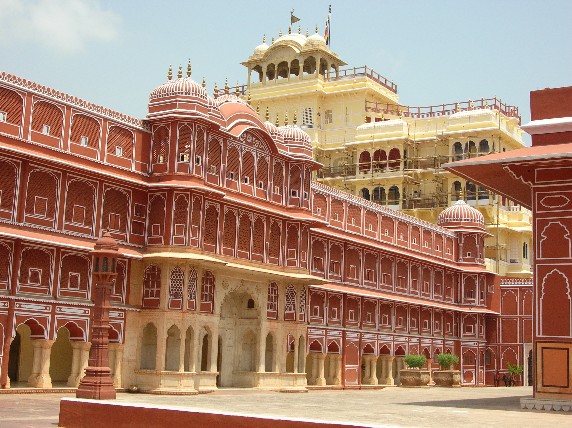
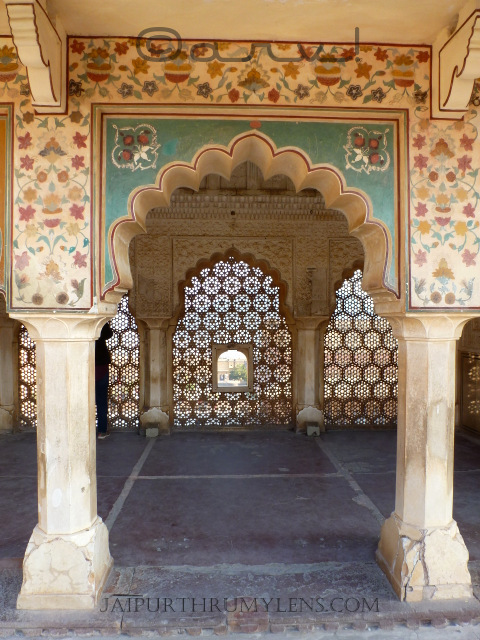
Patron: Queen Kanakwati (Rajput-Mughal court culture)
Hybrid features:
• Mughal-style cusped arches
• Lotus dome (hybrid form)
• Pietra dura-like decorative restraint
• Symmetry uncommon in earlier Rajput temples
📚 Asher & Talbot, India Before Europe
3. Hindu & Rajput Palaces with Strong Indo-Islamic Synthesis
A. Amer Fort (16th–17th c.)
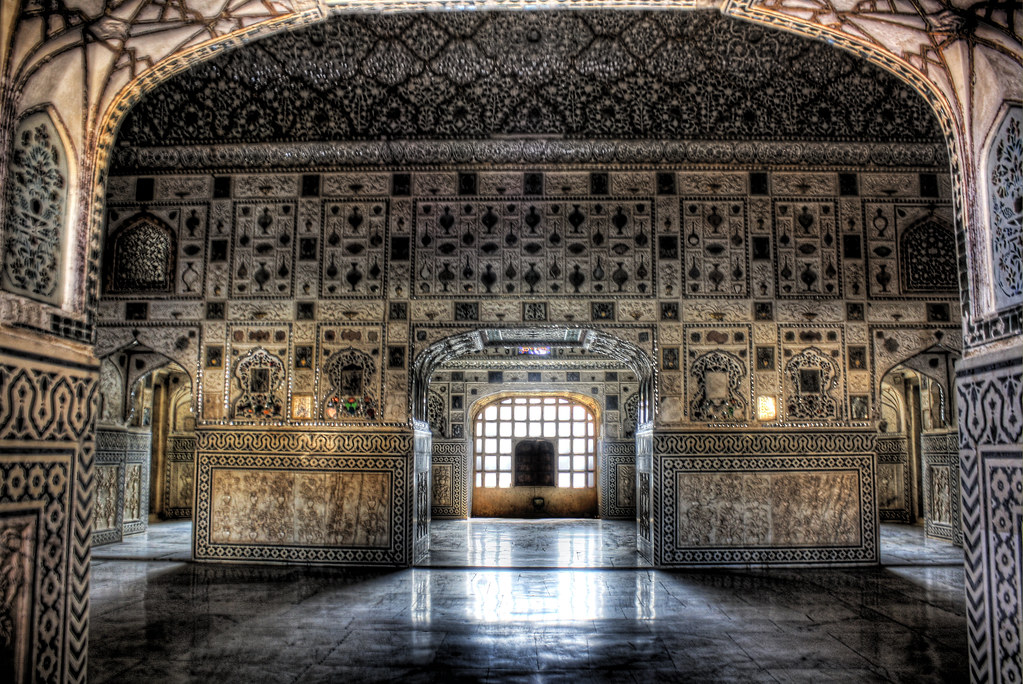

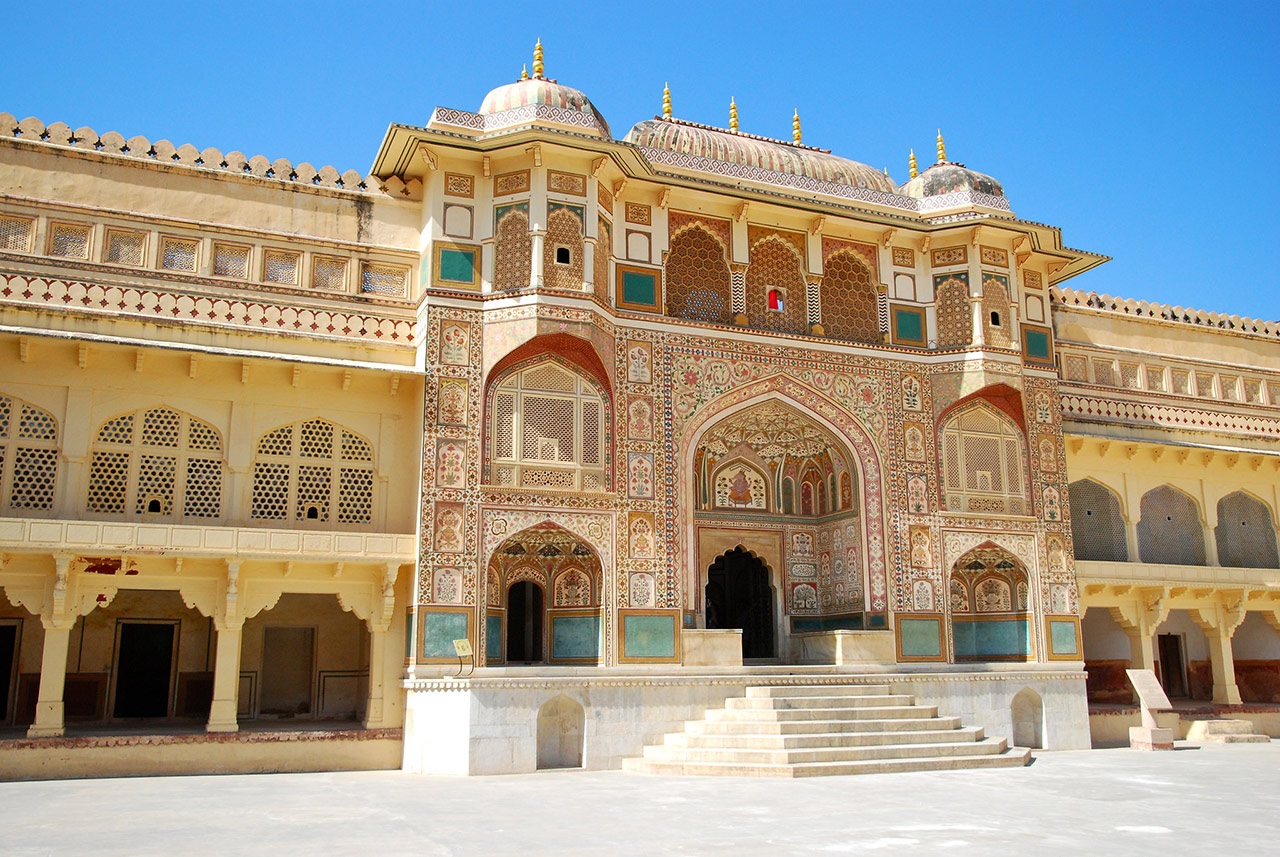
Indo-Islamic features:
• Charbagh-inspired palace gardens
• Sheesh Mahal (mirror work derived from Persian aesthetics)
• Cusped arches
• Symmetrical courtyards
• Jali screens influenced by Mughal harem architecture
📌 Built by Hindu Rajput rulers deeply integrated into Mughal political culture.
📚 Ebba Koch, Mughal Architecture
B. City Palace Jaipur
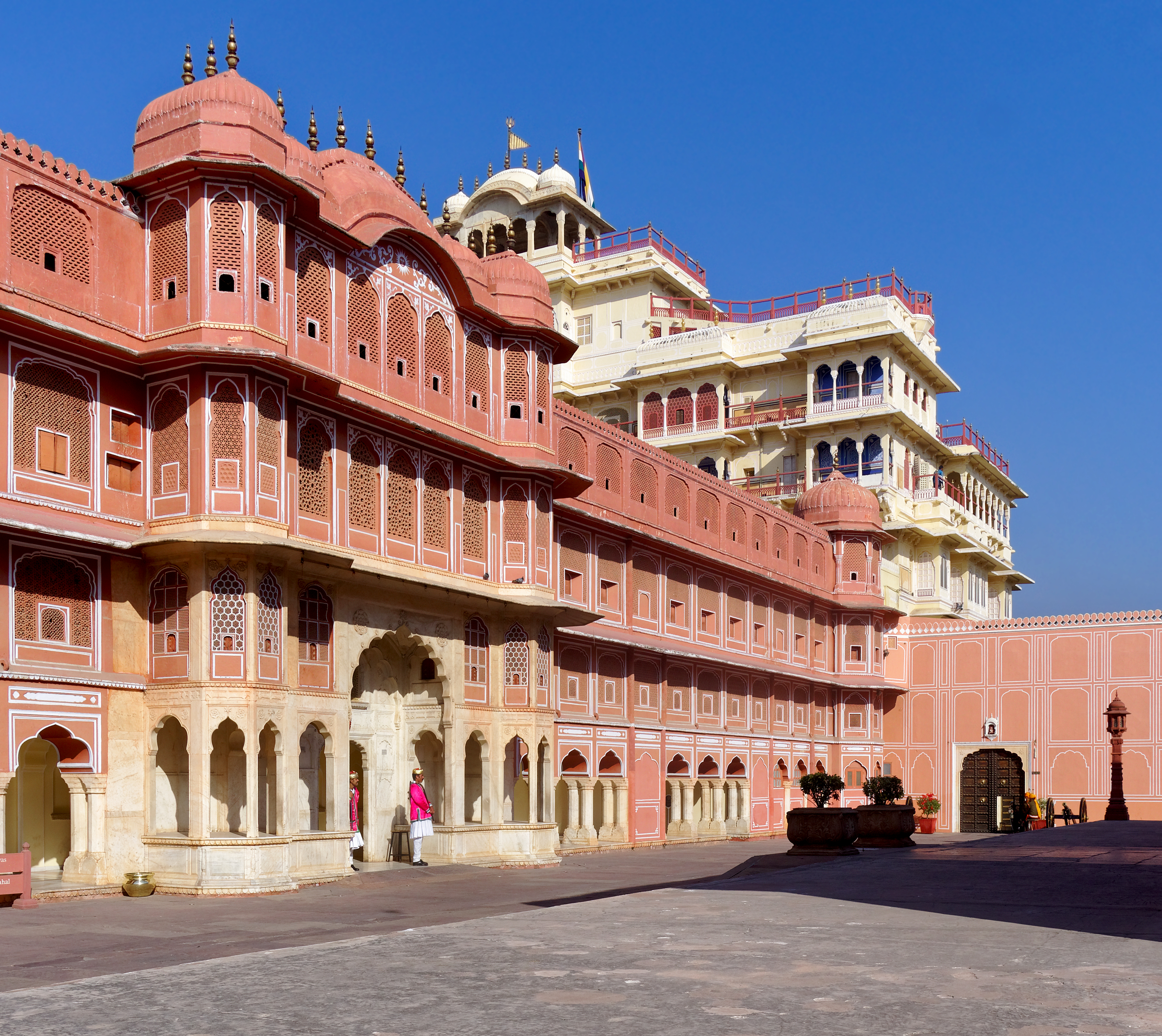


Notable Indo-Islamic elements:
• Mughal-style chhatris
• Painted Persian-inspired motifs
• Formal symmetry
• Diwan-i-Am and Diwan-i-Khas layouts (Islamic court typology)
📚 Tillotson, Mughal India
C. Udaipur City Palace
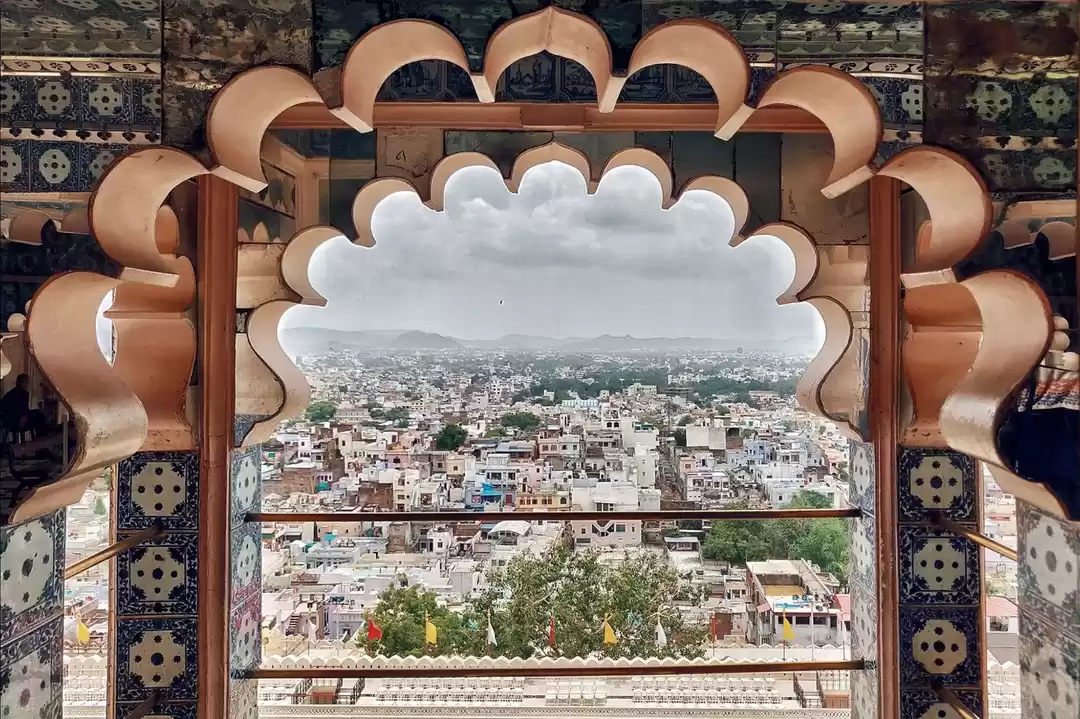

Features absorbed:
• Arched balconies
• Domed pavilions
• Decorative plaster work
• Persian-style wall painting themes
Even fiercely independent Mewar rulers adopted Islamic aesthetics without Islamic identity.
📚 Satish Chandra, Medieval India
4. Why This Happened (Historical Explanation)
Key reasons (agreed by historians):
Islamic polities introduced new engineering techniques
Hindu rulers patronized Muslim craftsmen
Court culture was cosmopolitan, not communal
Architecture followed power, efficiency, and prestige
No stigma was attached to borrowing form without faith
Richard Eaton summarizes this well:
“Religious boundaries were far more porous in art and architecture than in theology.”
📚 Richard Eaton, India in the Persianate Age
5. What Was Not Borrowed
To be explicit (and academically important):
| Not Borrowed | Why |
|---|---|
| Mosque prayer orientation | Ritual incompatibility |
| Mihrab as religious symbol | Faith-specific |
| Calligraphy with Qur’anic text | Religious boundary |
| Islamic worship spaces | Clear separation |
Borrowing stopped at form, not belief.
6. Scholarly Consensus (Short Summary)
From the 13th century onward, Hindu sacred and royal architecture in North India shows selective adoption of Indo-Islamic forms, driven by craft transmission, imperial culture, and aesthetics, not religious conversion.
This view is mainstream in academic historiography.
7. Academic Sources
• Catherine B. Asher – Architecture of Mughal India
• George Michell – The Hindu Temple
• Richard M. Eaton – India in the Persianate Age (1000–1765)
• Ebba Koch – Mughal Architecture
• Satish Chandra – Medieval India
• Asher & Talbot – India Before Europe
• Thomas Metcalf – Islamic Architecture in India


Comments
Post a Comment